

Kids Swimwear Care Guide
Pool days, beach days, swimming lessons and backyard splashing can be tough on kids' swimmers. Chlorine, saltwater, sand, sunscreen and heat all come along for the ride, so a simple care routine can make a real difference to how your child's swimwear looks and feels over time.

1. Rinse Kids Swimwear After Every Swim
The easiest habit is also one of the most useful: give swimwear a thorough rinse in fresh, cool water after the pool or beach. This helps wash away chlorine, salt, sand and residue sitting on the fabric before the swimmers are washed properly at home.
If there is a beach or pool shower nearby, a quick rinse before heading home is worth doing. It takes less time than digging sand out of the car later anyway.
For regular swimming lessons: keep the rinse step consistent. Chlorine-resistant fabric is designed to handle pool use better then normal fabric, but "chlorine resistant" does not mean the garment should stay soaked in chlorinated water after swimming.
2. How to Wash Kids Swimwear
Swimwear contains stretch fibers and performance fabrics that need different care from an everyday cotton T-shirt. The safest rule is simple: follow the care label on the garment you own.
How to wash Little E & Co swimwear
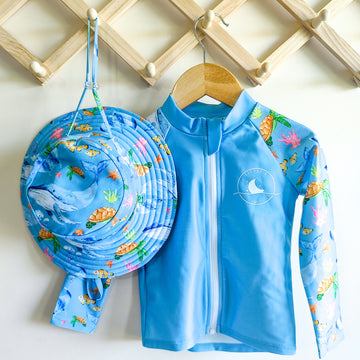
Our current rashie, swim short and swim hat care instructions specify: cold hand wash only, do not dry in direct sunlight, do not tumble dry, do not iron and do not dry clean.
You can browse our UPF 50+ kids swimwear here.
Start with a fresh-water rinse
Rinse away pool water, salt and loose sand before washing.
Cold hand wash
Gently hand wash Little E & Co rashies, swim shorts and swim hats in cold water according to the garment care instructions. Avoid treating swimwear like a heavy-duty laundry load.
Handle the fabric gently
Avoid aggressive scrubbing, twisting or wringing. Gentle handling places less stress on stretchy swimwear fabric and seams.

3. How to Care for Swimwear After Chlorine
Wondering how to get chlorine out of kids swimwear? Start with fresh water. Rinse the swimmers thoroughly as soon as practical after leaving the pool, then wash them according to their care label.
This matters even when the fabric is described as chlorine resistant. Chlorine resistance is a useful performance feature, but leaving a wet swimwear sitting in chlorinated water inside a towel or bag is still poor care.
Always be aware of rough pool surfaces or edges as abrasive surfaces can snag or pill swimwear fabric.
4. What About Saltwater and Sand?
Beach days are a different combination: salt, sand, sunscreen and rough surfaces. Give the swimsuit a good fresh-water rinse after the beach and remove loose sand gently rather than scrubbing at the fabric.
Again watch where little ones sit. Rough pool edges, rocks and other abrasive surfaces can snag or pill swimwear fabric. A towel underneath them is an easy extra layer between swimmers and rough ground.

5. Sunscreen and Swimwear: What Parents Should Know
Sunscreen is non-negotiable for exposed skin, but lotions and oils can transfer onto swimwear fabric. Where practical, apply sunscreen before getting your child dressed and allow it time to absorb before putting swimmers on. If sunscreen does get onto the fabric, follow the garment's normal care instructions rather than attacking the mark with harsh products.
Swimwear is only one part of sun protection. Cancer Council Australia recommends using a combination of sun-protective clothing, SPF 50 or SPF 50+ broad-spectrum water-resistant sunscreen, a broad-brimmed hat, shade and sunglasses when UV is 3 or above.
6. How to Dry Swimwear Properly
Heat is NOT your swimmer's friend. Little E & Co care instructions say not to tumble dry and not to dry the garment in direct sunlight. After washing, gently reshape the swimmers and allow them to dry according to the garment label. Tumble drying swimwear can destroy stretchy fibers and causes friction and snags.
Do
- Rinse in fresh, cool water after swimming
- Cold hand wash Little E & Co swimwear
- Handle stretchy fabric gently
- Dry away from direct sunlight
- Let swimwear dry before storing
Avoid
- Tumble drying Little E & Co swimwear
- Direct-sun drying
- Ironing or dry cleaning
- Leaving wet swimmers bundled in towels
- Rough or abrasive surfaces where possible
7. Don't Leave Wet Swimwear Scrunched in a Bag
Every parent knows the forgotten-swimmers-at-the-bottom-of-the-bag situation. Try not to leave them there.
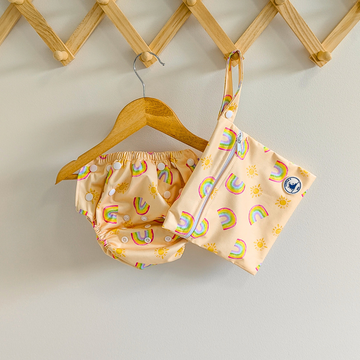
If you use one of our mini wet bags to get damp gear home, unpack it when you arrive, wash swimwear and let everything dry properly. Wet bags are brilliant for containing the mess on the way home, they are not long-term storage.
Kids Swimwear Care: The Quick Guide
| After... | What to do | What NOT to do |
|---|---|---|
| Pool swimming | Rinse well in fresh, cool water, then follow the garment care label. | Leaving swimmers soaked in chlorinated water inside a towel or bag. |
| Beach swimming | Rinse away salt and loose sand gently. | Aggressive scrubbing or pulling at trapped sand. |
| Washing | For Little E & Co rashies, swim shorts and swim hats cold hand wash only. | Treating the garment like heavy everyday laundry. |
| Drying | Dry according to the care label and away from direct sunlight. | Tumble drying Little E & Co swimwear. |
| Sunscreen | Apply before dressing where practical and let it absorb. | Harsh stain treatments that are not approved on the garment label. |
Our Easy Post-Swim Routine
You do not need a complicated laundry ritual. Make the rinse part automatic and the rest becomes much easier.
Pool Day
Swim → rinse in fresh water → cold hand wash → dry away from direct sunlight → ready for the next splash.
Beach Day
Swim → shake or rinse away loose sand → fresh-water rinse → cold hand wash → dry away from direct sunlight.

Kids Swimwear Care FAQs
How should you wash kids swimwear?
Always check the garment care label. Little E & Co rashies, swim shorts and swim hats are currently labelled for cold hand washing only. Rinsing in fresh, cool water after swimming is also a useful first step.
Should you wash swimwear after every use?
At minimum, rinse swimwear thoroughly in fresh, cool water after each pool or beach session. Then wash it as directed on the garment care label.
How do you get chlorine out of kids swimwear?
Rinse the swimsuit thoroughly with fresh, cool water as soon as practical after leaving the pool, then wash it according to its care instructions. Avoid leaving chlorinated swimwear bundled inside a wet towel.
Can Little E & Co swimwear go in the washing machine?
Our current rashie, swim short and swim hats care instructions specify cold hand wash only, so follow the garment label rather than putting these pieces through a normal machine cycle.
Can you put kids swimwear in the dryer?
Not Little E & Co rashies and swim shorts. Their current care instructions say not to tumble dry. Always check the label on the specific swimsuit you own.
How do you remove sand from kids swimwear?
Rinse loose sand away with fresh water and handle the fabric gently. Avoid aggressive rubbing, twisting or stretching while trying to remove stubborn sand.
Does chlorine damage swimwear?
Chlorine can be hard on many swimwear fabrics over time. Chlorine-resistant swimwear is designed to cope better with pool use, but rinsing after swimming and following the garment care label is still sensible care.
How do you care for UPF 50+ swimwear?
Follow the manufacturer's care label, avoid excessive heat and inspect the garment as it wears. For Little E & Co rashies and swim shorts, that means cold hand washing, no tumble drying and no drying in direct sunlight.
Ready for the Next Little Adventure?
Explore colourful Little E & Co kids swimwear made for beach days, pool play and sunny Australian adventures, with UPF 50+ coverage and chlorine-resistant fabric.
Shop Kids Swimwear →Heading home after a chilly swim? Pair their swimmers with one of our kids hooded poncho towels for the trip from the water to the car.
Sources & Further Reading
- Little E & Co — current product fabric and care instructions: Long Sleeve Children's Rashie & Swim Shorts Combo
- Speedo Australia — general swimwear care guidance: Caring for Your Swimwear
- Cancer Council Australia — Australian sun protection guidance: Sun protection and UV guidance


