

Every time your little one splashes around at the beach or the local pool, there's a good chance they're wearing the ocean itself, recycled, transformed, and stitched into something soft, bright, and beautiful. It sounds like something out of a science fiction story, but it's real, and it's one of the most exciting shifts happening in children's fashion right now.
At Little E & Co, our fabric isn't just chosen for comfort or cuteness (though it's both of those too). It starts with a genuine commitment to the world our kids are going to grow up in. So if you've ever wondered exactly how a plastic bottle floating off the coast becomes a perfectly soft rashie, this one's for you.
The Problem in Our Oceans and Why It Matters for Parents
Right now, millions of tonnes of plastic waste enter our oceans every year. Much of it sinks, breaks down into microplastics, and quietly infiltrates the food chain. Seabirds, fish, turtles, and eventually, us.
For parents, this isn't abstract. It's the reef your child snorkels at. It's the beach you pack the sunscreen for. It's the future they're going to live in. That's exactly why more families are asking not just what their kids wear, but what it's made of — and where it came from.
The good news? The textile industry has found a way to turn part of this crisis into a solution.
Step 1: Collecting the Plastic
The journey from ocean waste to wearable fabric begins at the source. Plastic bottles, the most common form of PET (polyethylene terephthalate) plastic, are collected from beaches, waterways, and coastal communities. Many collection programs specifically target areas within 50 kilometres of coastlines in regions that lack formal waste or recycling infrastructure, meaning the plastic being gathered is genuinely at high risk of ending up in the sea.
In some programs, this collection is carried out by local workers paid fair wages, turning environmental cleanup into dignified employment. The social and environmental impact runs together.
Step 2: Sorting, Cleaning, and Breaking Down
Once collected, the plastic goes through a rigorous sorting process. Bottles are separated by type, cleaned thoroughly, and stripped of labels and caps. Then comes the transformation: the plastic is chopped into small chips or flakes, washed again to remove any remaining contaminants, and melted down into a raw resin.
This step is where the magic starts. What was once a drink bottle becomes a liquid polymer, essentially, raw material with a second life waiting.
Note: Not all recycled fabrics are the same. Some are made from pre-consumer waste (like factory offcuts), while others use post-consumer plastic, like the bottles that actually reached a bin or a beach. Post-consumer recycled content has a bigger real-world environmental impact.
Step 3: Spinning Yarn from Plastic
The molten resin is then extruded, pushed through tiny nozzles, to form long, continuous fibres. These fibres are cooled, drawn out to improve their strength and flexibility, and then textured to give them the soft, fabric-like feel you'd expect from performance swimwear. The result is yarn: lightweight, durable, and surprisingly soft.
This is the same basic process behind well-known recycled fabric technologies like REPREVE®, which is made from post-consumer plastic bottles and has been used to keep billions of bottles out of landfill. Depending on the garment size, a single kids' rashie or swim set typically contains the equivalent of 5 to 8 recycled plastic bottles.
That's 5 to 8 bottles that aren't sitting on a beach somewhere.
Step 4: Weaving the Fabric
The recycled yarn is then knitted or woven into swimwear-grade fabric. For kids' swimwear specifically, manufacturers blend the recycled polyester with a small amount of spandex or elastane, this is what gives the fabric that essential four-way stretch, so little arms and legs can move freely.
The finished fabric is then treated for UV protection, resulting in the UPF50+ rating that blocks out the majority of the sun's harmful rays. It's also engineered to resist chlorine degradation, so it holds its shape and colour after repeated pool sessions — which, let's be honest, is exactly what you need when you have a toddler who wants to swim every single weekend.
Warning: UPF ratings can degrade over time with heavy use and improper washing. Always rinse swimwear in cool fresh water after pool or ocean use, and air-dry in the shade rather than leaving it in direct sunlight for extended periods. This keeps the fabric performing at its best for longer.
Step 5: Designing and Printing
Once the fabric is ready, it's time to bring the prints to life. At Little E & Co, our designs are created by local Australian artists, which means every piece carries something genuinely unique, not just a pattern, but a story rooted in this place.
Eco-conscious brands typically use water-based or sublimation inks for their prints, which bond directly into the fibres rather than sitting on top of them. This means the colours are vivid and lasting, and the process keeps harmful chemicals out of the waterways.
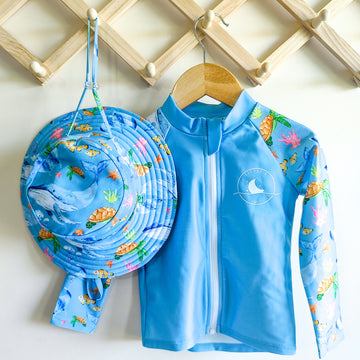
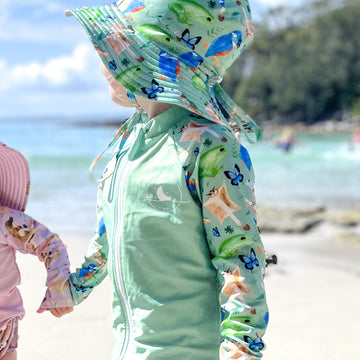
Our UPF50+ long sleeve rashies are made with exactly this fabric, recycled polyester and spandex swim fabric that's chlorine safe, pool friendly, and designed to last season after season.
Why It Performs Better Than You'd Expect
Here's where a lot of parents are genuinely surprised: recycled swimwear fabric isn't a compromise. In many ways, it outperforms conventional swimwear materials.
Because the fibres go through such an intensive manufacturing process, the end result is dense, consistent, and remarkably durable. It resists pilling, holds its shape, and doesn't fade easily. The blend of recycled polyester and spandex used in quality baby and kids' swimwear is chlorine-resistant, quick-drying, and gentle on sensitive skin, no scratchy seams, no stiff fabric after the first wash.
For babies and toddlers especially, that last point matters. Little skin is sensitive skin. Choosing fabric that's been rigorously processed and certified means fewer irritants and a better experience for your child, and fewer complaints at pool time.
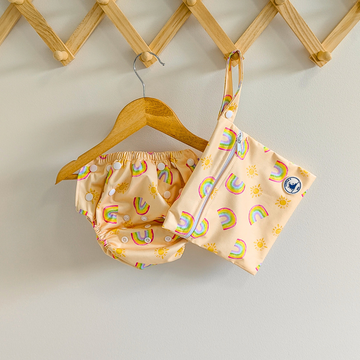
Our reusable swim nappies use a soft inner mesh lining paired with a durable outer PUL polyester shell, built to be washed and reused, rather than thrown away after a single swim session. That's sustainability you can see in action every time you pack the swim bag.
The Bigger Picture: What Your Purchase Does
When you choose sustainable baby swimwear made from recycled materials, you're participating in something larger than a single transaction. Here's what's actually happening:
Less virgin plastic production. Every kilogram of recycled polyester produced means less petroleum extracted and refined for new plastic. The energy savings compared to producing virgin polyester are significant.
Fewer bottles in the environment. The demand for recycled fabric creates economic incentive to collect plastic that would otherwise end up in waterways or landfill.
A message to the industry. Consumer choices shape manufacturing. When families choose recycled and sustainable fabrics, brands and suppliers respond.
At Little E & Co, we donate 10% of profits to Australian charities, because protecting the world your child swims in doesn't stop at the fabric. It's in the whole approach.
What to Look for When Choosing Sustainable Kids' Swimwear
Not every brand that calls itself "eco-friendly" tells the full story. Here's a quick checklist for parents doing their research:
- Recycled fabric certification — Look for GRS (Global Recycled Standard) or OEKO-TEX® Standard 100 certification, which confirms the fabric is free from harmful chemicals
- UPF50+ rating — Essential for Australian conditions; protects against UV-A and UV-B rays
- Chlorine resistance — Means the garment lasts through more swim sessions before needing replacement
- Reusable accessories — Swim nappies and wet bags that replace single-use items extend the sustainability beyond just the fabric
- Transparent sourcing — Brands that tell you where their materials come from and how they're made
Pro Tip: A swim set that costs a little more but lasts two full swim seasons is almost always better value — and better for the planet — than a cheap swimsuit that fades and stretches out after a month. Think cost-per-wear, not just sticker price.
The Ocean Gave Us So Much. Now We Can Give Something Back.
There's something quietly powerful about dressing your child in fabric that was once floating in the sea. It's a small, everyday act with a real connection to the health of our oceans and the future of the world they'll inherit.
Our full baby and kids' swim range — from reversible wide-brim swim hats to complete four-piece swim sets — is built on this foundation. Recycled materials. Australian-designed prints. UPF50+ protection. And 10% of every purchase going back to causes that matter.
The ocean didn't give up on us. Let's not give up on it.
Little E & Co is a Brisbane-based sustainable babies' and children's swimwear brand, founded by a mum of three who believes the best way to protect the world your kids explore is to make the things they wear part of the solution.


