
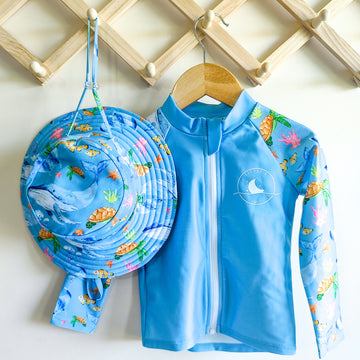
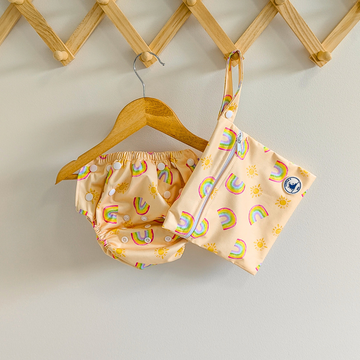
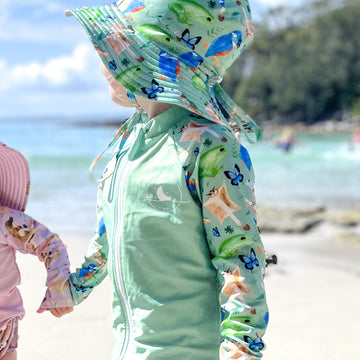

If you've ever shopped for kids' swimwear, you've probably come across the word rashie. It's a term you'll hear all the time in Australia — but if you're wondering what it actually means, you're definitely not alone.
The good news? A rashie is one of the easiest ways to help keep little ones comfortable and protected while they swim, splash and explore. Whether you're planning beach days, swimming lessons or a family holiday, it's a swimwear essential that many parents wouldn't be without.
Below, we've answered the questions parents ask us most — from what a rashie is, to how it should fit, what to wear underneath, and whether it really protects your child from the sun.
The short version
- A rashie is a soft, stretchy, quick-drying swim top worn in and around the water.
- Rashie, rash vest, rash guard and rash shirt all mean the same thing.
- UPF 50+ fabric blocks up to 98% of UV rays across the areas it covers.
- It should feel snug, never tight — and nothing needs to be worn underneath.
What is a rashie?
A rashie (short for rash shirt or rash guard) is a swim top made from soft, stretchy, quick-drying fabric designed to be worn in and around the water.
Originally, rashies were made for surfers to help prevent the skin irritation caused by rubbing against a surfboard — also known as "board rash." Today, they're loved by families everywhere because they help protect the shoulders, chest, back and arms while kids swim and play.
Many rashies, including our long sleeve rashies at Little E & Co, are made with UPF 50+ fabric, which helps block up to 98% of harmful UV rays across the areas they cover.
Unlike a regular T-shirt, a rashie is designed to stay lightweight when wet, dry quickly and move comfortably with active kids. Whether your little one is building sandcastles, learning to swim or running through sprinklers in the backyard, a rashie is made to keep up with every adventure.

Same top, different name
What's the difference between a rashie and a rash vest?
Not much at all — the name simply changes depending on where you are in the world.
They all refer to the same type of swim top. So if you're shopping online from another country, don't worry if you see a different name — you're looking at the same product.
Getting dressed
What do you wear under a rashie?
For most children, nothing needs to be worn underneath. Rashies are designed to sit comfortably against the skin, just like a swimsuit — and adding another shirt underneath can leave kids feeling hot and uncomfortable once they're wet.
Instead, pair a rashie with:
The simplest everyday pairing.
Great for older kids and extra leg coverage.
For babies and toddlers still in nappies.
Shades the face, ears and back of the neck.
That's all you need for a comfortable swim outfit. If your child is swimming in cooler weather or wearing a wetsuit, a rashie can also be worn underneath to help reduce rubbing and add an extra layer of comfort.
Fit guide
Should a Rash Vest Be Tight?
A rash vest should feel snug, but not uncomfortably tight. The stretchy fabric sits closer to the body than an everyday T-shirt, helping prevent it from ballooning or riding up in the water. Your little one should still be able to stretch, splash and move freely without the fabric digging in.
A good fit looks like
- Sits comfortably against the body
- Lets your child move and stretch freely
- Stays put while swimming
- Comfortable enough to wear all day
Time to size up if
- It leaves deep marks on the skin
- It's a struggle to pull on
- Your child keeps trying to take it off
- Sleeves or hem are pulling short
Stuck between two sizes? Many parents prefer to size up slightly, so there's a little room to grow while still keeping a comfortable fit.
Sun safety
Do rashies protect kids from the sun?
Yes — as long as they're made with UPF-rated fabric.
A UPF 50+ rashie blocks up to 98% of harmful UV rays across the areas it covers — and unlike sunscreen, that protection doesn't wash off in the water.
That said, a rashie isn't a replacement for sunscreen. For the best protection, we recommend:
- Wearing a UPF 50+ rashie
- Applying sunscreen to any exposed skin
- Adding a sun-safe swim hat
- Taking shade breaks during peak UV hours
- Reapplying sunscreen as directed
When you're shopping, always check that the garment clearly states its UPF rating — not all swim tops offer certified sun protection.
Choosing a style
Long sleeve vs short sleeve rashies
Both are great options — they simply suit different situations.
Long sleeve
The most coverage, with less skin left exposed to the sun.
- Beach days and family holidays
- Swimming lessons and water parks
- Long afternoons outdoors
Short sleeve
Lighter coverage for kids who prefer less on their arms.
- Indoor pools
- Cooler-weather swims
- Quick dips and backyard play
If your family spends lots of time outdoors, long sleeves are usually the more sun-smart choice. At Little E & Co, our long sleeve rashies are thoughtfully designed for active little adventurers — combining playful prints by Australian artists with UPF 50+ fabric and a full-length zipper for easy changing.
Shop our long sleeve rashies
Eight prints, each designed by an Australian artist. Sizes 000–5.
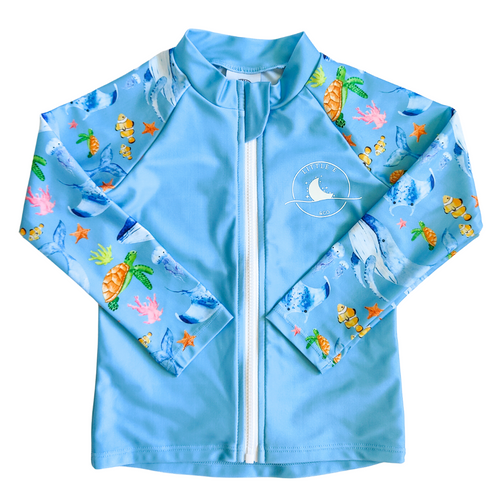
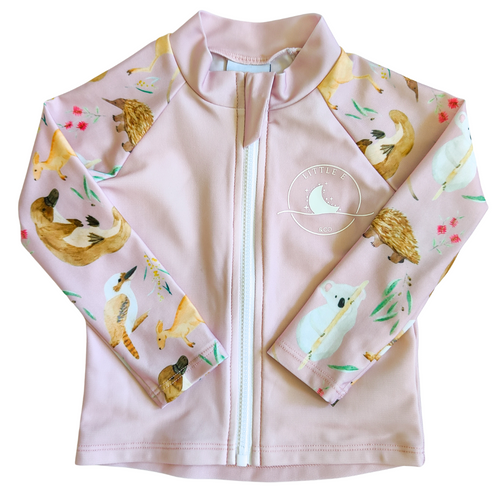
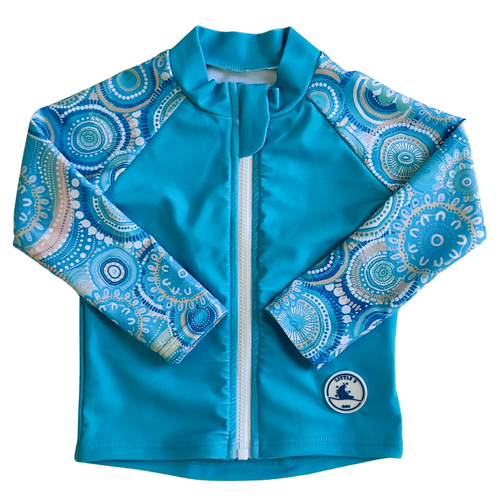
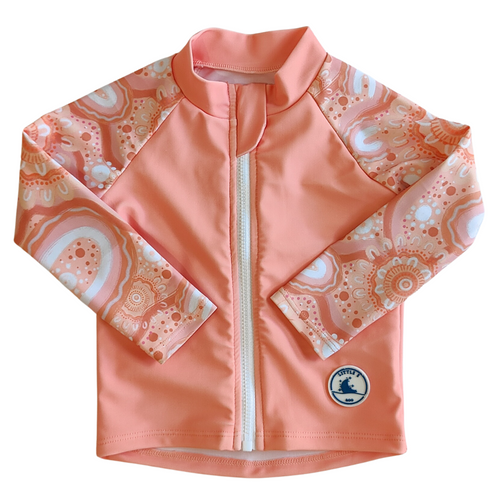
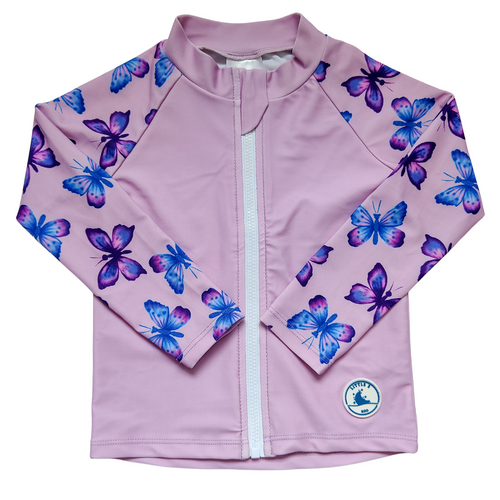
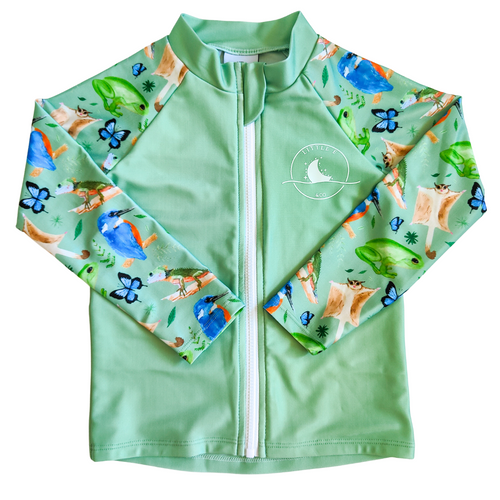
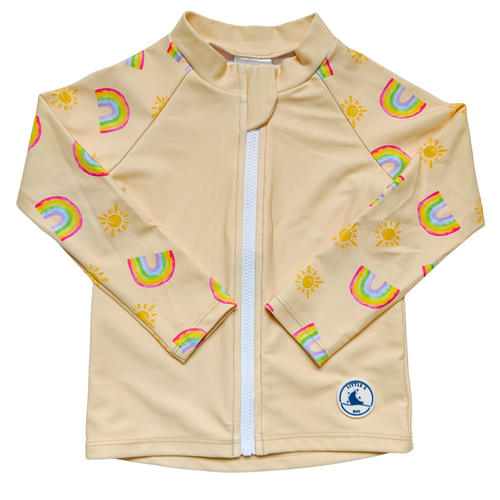
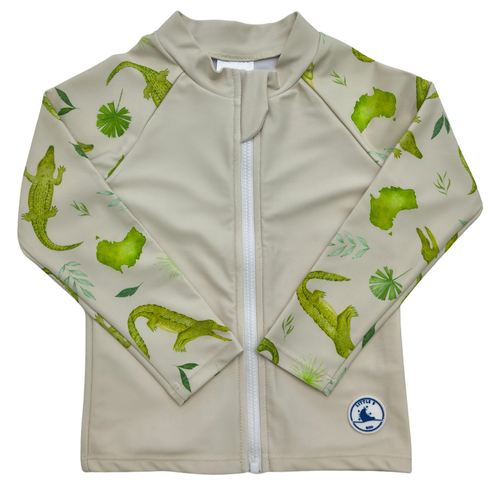
Swipe to see all eight prints →
Why they earn their place
Why parents love rashies
Once families start using rashies, it's easy to see why they become a swim bag essential.
Shoulders, back, chest and arms.
Stays light when wet, never heavy.
Straight from the beach to the car.
Only exposed skin needs it.
And kids love them because they're soft, stretchy and comfortable enough to wear while swimming, digging in the sand, jumping through waves or simply running around outside. One less thing for you to worry about — and one more reason for them to enjoy being outdoors.


Before you buy
How to choose the right rashie
Not all rashies are created equal. When you're choosing one for your child, look for:
- UPF 50+ rated fabric
- Long sleeves for extra coverage
- Soft, stretchy material
- Flat seams that won't rub
- Quick-drying fabric
- Stitching built to last
- A full-length zipper for easy changing
- Prints they'll actually want to wear
Ready for your next adventure?
Whether you're heading to your local pool, planning a tropical holiday or spending every weekend at the beach, a good rashie is one of those pieces you'll reach for again and again.
Shop long sleeve rashiesAt Little E & Co, we've created a collection of long sleeve rashies, matching swimwear and reusable swim nappies designed for comfort, adventure and everyday family moments — with UPF 50+ sun protection options throughout the range. Because childhood is for splashing, exploring and making memories, not worrying about uncomfortable swimwear.
Frequently asked questions
Can kids wear a rashie without swimming?
Absolutely. Rashies aren't just for the water — they're great for beach walks, paddle boarding, kayaking, boating, camping, backyard play or any outdoor adventure where extra sun protection helps. Because they're lightweight and quick-drying, they stay comfortable even when your child isn't swimming.
Do babies need a rashie?
Babies have delicate skin that's more sensitive to the sun, so many parents choose a UPF 50+ rashie for extra coverage. Pair it with a reusable swim nappy, a wide-brim swim hat and sunscreen on exposed skin for a practical, sun-smart swim outfit.
Can kids wear sunscreen under a rashie?
Yes. While a UPF 50+ rashie protects the skin it covers, it's perfectly fine to apply sunscreen underneath if you prefer. Just don't forget the areas the rashie doesn't cover — face, neck, hands, lower legs and feet.
What is a rashie shirt?
A rashie shirt is simply another name for a rashie or rash guard. It's a lightweight swim shirt designed to be worn in the water and outdoors, helping protect the skin from the sun while drying much faster than a regular T-shirt.
Can kids wear a rashie all day?
Yes. Rashies are designed to be lightweight, breathable and comfortable enough for all-day adventures. Whether your child is swimming, building sandcastles, exploring rock pools or having lunch by the beach, a good-quality rashie is made to move with them.
Does a rashie replace sunscreen?
Not completely. A UPF 50+ rashie protects the skin it covers, but you'll still need sunscreen on exposed areas like the face, neck, hands and legs. For the best protection, pair a rashie with sunscreen, a wide-brim swim hat and regular shade breaks.
Are long sleeve rashies better than short sleeve?
Both styles work well, but long sleeve rashies provide more coverage and reduce the amount of exposed skin that needs sunscreen. If your family spends a lot of time at the beach or pool, long sleeves are often the preferred choice for added sun protection.
Are rashies only popular in Australia?
Not at all. The word "rashie" is mainly used in Australia and New Zealand, but families around the world wear the same style of swim top — you'll just hear it called a rash guard or rash vest instead.
How long does a kids' rashie last?
With proper care, a quality rashie can last multiple swim seasons. Rinse it in fresh water after swimming, avoid leaving it in direct sunlight to dry for long periods, and follow the care instructions to help preserve both the fabric and its UPF protection.
Keep exploring
Shop sun-safe swimwear for every adventure
Whether you're shopping from Australia or anywhere else in the world, Little E & Co ships internationally — so families everywhere can enjoy thoughtfully designed, sun-safe swimwear.
Made for little explorers. Loved by parents.


