

Swimming is a wonderful way for babies to explore water, build confidence, and stay active. But for little ones with eczema, reactive skin, or other sensitivities, a day at the pool can come with extra challenges.
Pool chemicals like chlorine, friction from rough fabrics, and prolonged dampness can all trigger irritation or flare-ups. The right swimwear can make a big difference in protecting delicate skin and keeping your baby comfortable.
This guide will help you choose gentle, protective swimwear designed for sensitive skin, so your child can enjoy the water while parents feel confident they’re making safe choices.
Why Sensitive Skin Needs Special Attention
Babies with eczema or reactive skin often have a weakened skin barrier, which means their skin loses moisture more easily and becomes irritated faster.
Common symptoms include:
• Dryness and flaking
• Redness and itching
• Increased irritation from friction
• Reactions to dyes or chemical finishes
• Sensitivity to chlorine and saltwater
Disclaimer: The information provided in this post is for educational purposes only and does not constitute medical advice. Always consult with a pediatrician or dermatologist before introducing new products or activities if your baby has a known skin condition. If you notice signs of infection or a severe flare-up after swimming, seek professional medical attention immediately.
Choosing swimwear that is soft, breathable, quick-drying, and protective can help reduce these triggers and keep swimming enjoyable.
Features to Look for in Baby Swimwear for Sensitive Skin
When choosing swimwear for babies with eczema, focus on fabrics and designs that minimize irritation while protecting skin from the sun and pool chemicals.
Soft, Quick-Drying Fabrics
Look for swimwear made from high-quality polyester or recycled polyester blends. These fabrics are commonly used in baby swimwear because they are:
• Soft and smooth against delicate skin
• Quick-drying, which prevents prolonged moisture exposure
• Durable and chlorine resistant
• Able to maintain UPF sun protection
Unlike cotton, which absorbs water and stays damp, polyester fabrics dry quickly and help reduce irritation caused by wet clothing.
Minimal Chemical Treatments
Choose swimwear from brands that priorities safe dyes and responsible manufacturing. Avoid products with unnecessary chemical finishes such as:
• PFAS coatings
• Stain-repellent treatments
• Harsh dyes
Simpler materials are often gentler on eczema-prone skin.
Flat Seams for Reduced Friction
Raised or thick seams can rub against sensitive skin and trigger itching. Look for:
• Flatlock seams
• Smooth interior stitching
• Soft lining where possible
These design features reduce friction and improve comfort during movement.
UPF 50+ Sun Protection
Babies with eczema may already have sensitive or compromised skin. UPF 50+ swimwear helps block up to 98% of harmful UV rays, reducing the need for frequent sunscreen reapplication that can sometimes irritate delicate skin.
Snug but Stretchy Fit
Swimwear should be secure without being tight. A well-fitting suit:
• Prevents rubbing and bunching
• Allows easy movement
• Keeps protective fabrics in place
Stretch fabrics ensure comfort while babies kick, crawl, and splash.
Style and Comfort Tips for Sensitive Skin
The design of the swimwear also plays a role in preventing irritation.
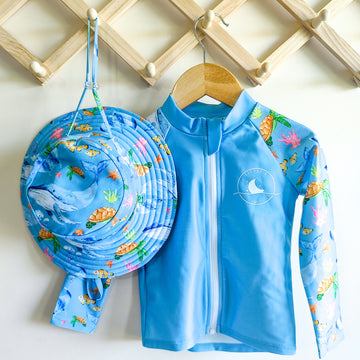
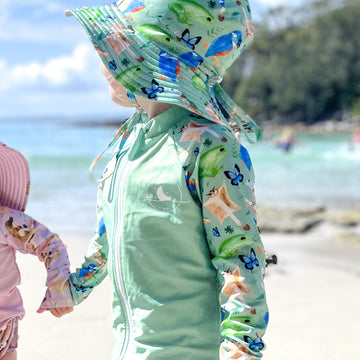
• Long-sleeve rash vests protect arms, shoulders, and chest from sun and friction
• One-piece suits offer more coverage and help keep skin protected
• Tagless designs reduce irritation on the neck or back
• Minimal embellishments prevent rubbing or pressure points
Full-coverage swimwear can also help reduce direct contact with chlorinated water, which may help minimise eczema irritation.
Caring for Sensitive-Skin Swimwear
Proper care helps keep swimwear gentle and free from irritants.
Before first use:
• Wash the swimwear to remove any manufacturing residues
After swimming:
• Rinse immediately with fresh water to remove chlorine or salt
• Wash with mild, fragrance-free detergent
• Avoid fabric softeners and bleach
• Allow to air dry completely
These steps help prevent chemical build-up that could irritate sensitive skin.
Helpful Products for Babies with Sensitive Skin
Parents often find it helpful to pair gentle swimwear with other supportive products:
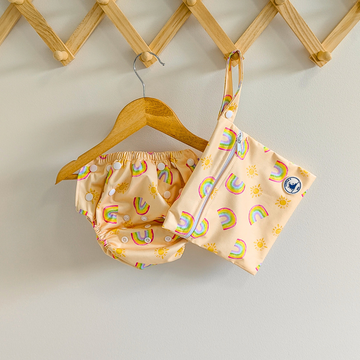
Reusable swim nappies
Designed without harsh chemicals and provide a comfortable fit for water play.
Soft hooded towels or ponchos
Reduce friction when drying and keep babies warm after swimming.
Wet bags
Allow used swimwear to be stored separately, preventing bacteria or moisture from affecting other clothing.
Combining these items into swim kits or bundles can make swimming trips easier for families.
Sensitive Skin Swimwear Checklist
Before buying baby swimwear, check for these key features:
✓ Soft, quick-drying fabric
✓ Minimal chemical finishes
✓ Flat seams to prevent chafing
✓ Tagless or smooth interior labels
✓ UPF 50+ sun protection
✓ Comfortable stretch fit
✓ Rinse thoroughly after each swim
Final Thoughts
Choosing the right swimwear for babies with eczema or reactive skin can make swimming far more comfortable. Soft fabrics, thoughtful design, and protective features help minimize irritation while keeping delicate skin safe from the sun and pool chemicals.
With the right swimwear and proper after-swim care, babies with sensitive skin can enjoy the many benefits of swimming — from building confidence in the water to supporting healthy development.
Disclaimer: The information provided in this post is for educational purposes only and does not constitute medical advice. Always consult with a pediatrician or dermatologist before introducing new products or activities if your baby has a known skin condition. If you notice signs of infection or a severe flare-up after swimming, seek professional medical attention immediately.


